
Home Improvement Tips & Info
Why Does Algae Keep Coming Back on Florida Driveways?
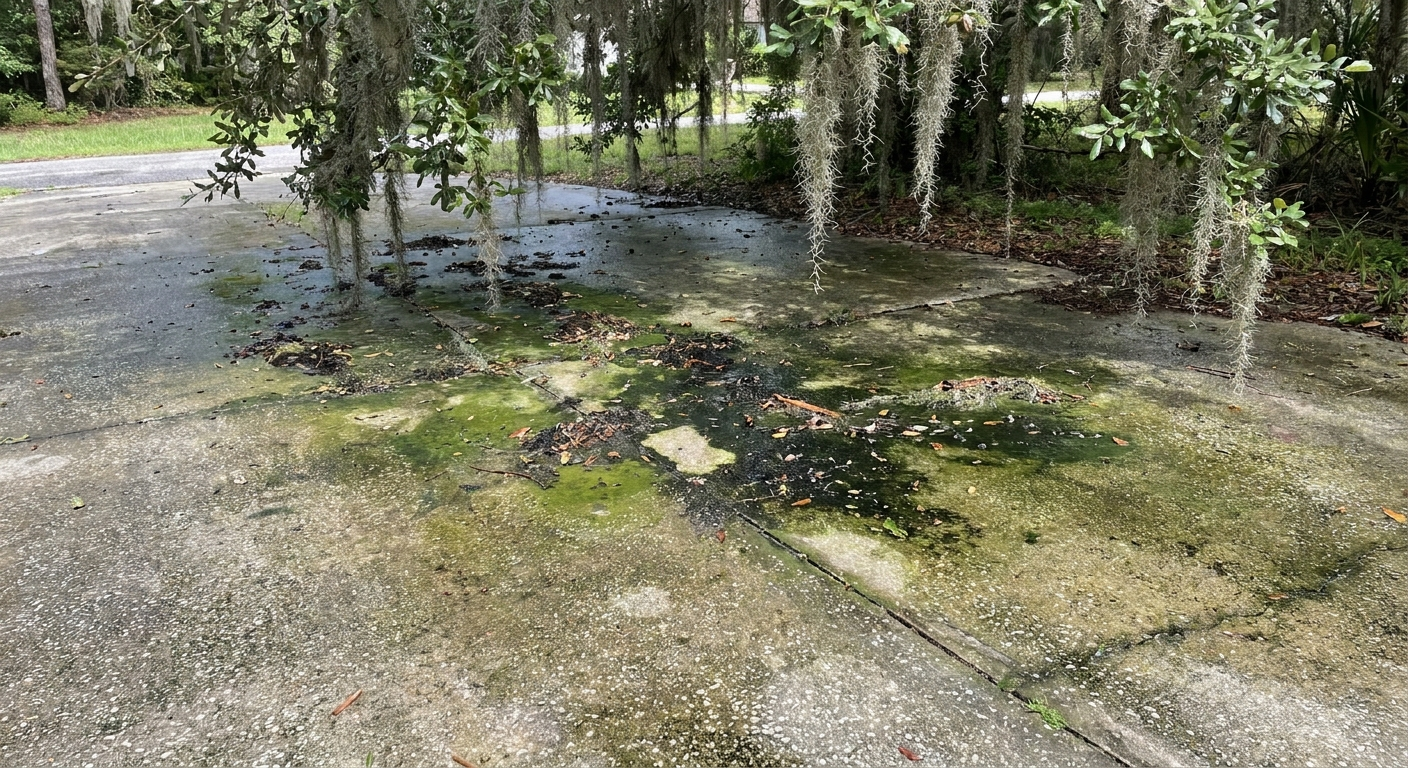
Florida driveways don't just get dirty. They get slimy. That green-black film creeping across your concrete isn't dirt, and it's not going away after one wash. It's algae, and it's thriving because your driveway is basically a petri dish. High humidity, constant rain, and year-round warmth create conditions where algae doesn't just survive—it multiplies faster than you can scrub it off.
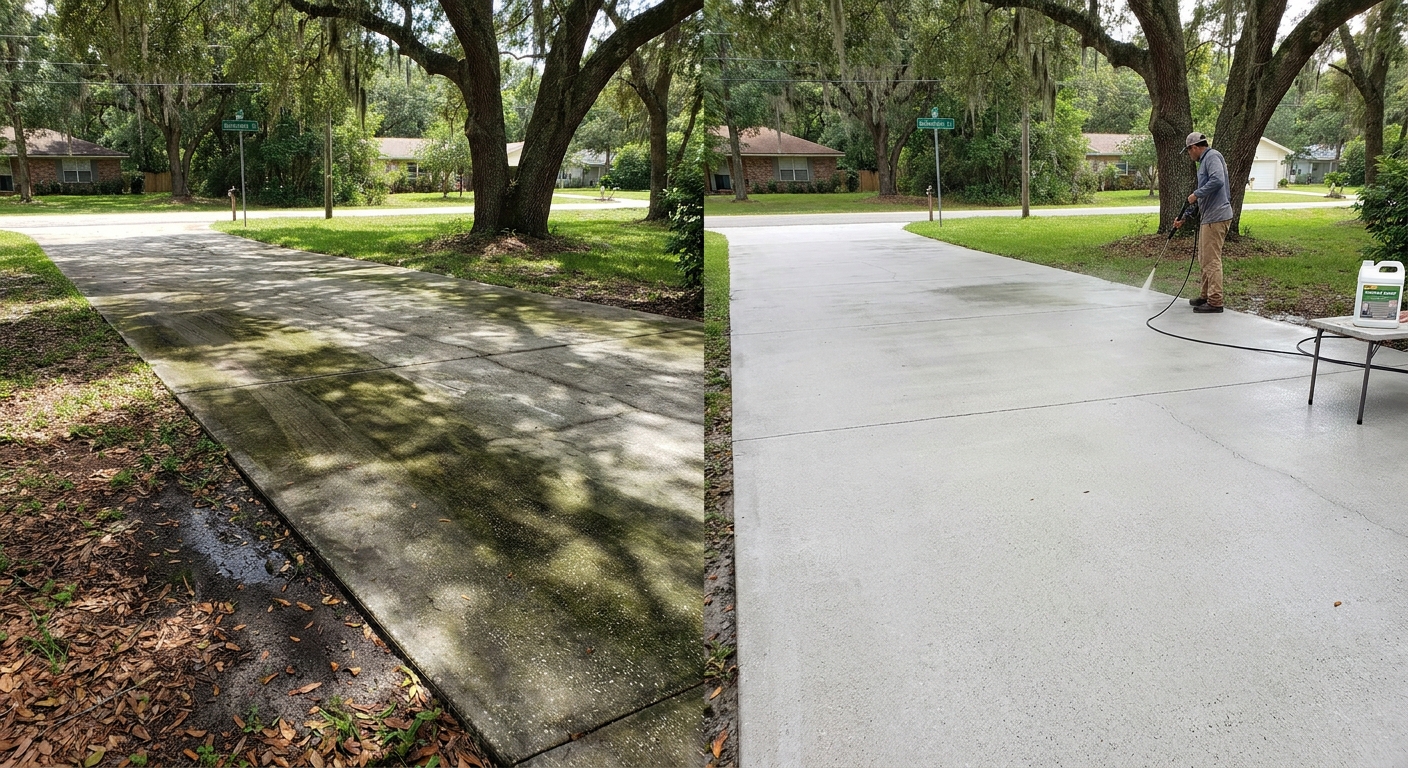
Most homeowners think a good pressure wash fixes the problem. It doesn't. The surface looks clean for a week, maybe two, then the slime returns. That's because algae spores are everywhere—floating in the air, hiding in the pores of your concrete, waiting for the next rainstorm to activate. If you're not addressing what's feeding the growth, you're just rinsing and repeating the same cycle.
Humidity and Heat Are Feeding the Problem
Florida's climate isn't just uncomfortable for people—it's paradise for algae. Warm temperatures and moisture are the only two things algae need to spread. In most states, winter kills off the spores. Here? There's no winter. Algae grow year-round, and summer's combination of heat and afternoon thunderstorms accelerates the cycle.
Rain doesn't just wash your driveway—it soaks it. Concrete stays damp for hours, sometimes days, especially in shaded areas. That's more than enough time for algae to take hold. By the time the surface dries out, the spores have already rooted into the porous material, setting up shop for the next growth cycle.
Concrete Holds More Than You Think
Your driveway isn't smooth. It's riddled with microscopic holes and crevices that trap moisture, dirt, and organic debris. Leaves, grass clippings, pollen—it all settles into those tiny spaces and becomes food for algae. Even after a deep clean, you're not getting everything out. The residue left behind is enough to fuel regrowth.
Pavers and unsealed concrete are especially vulnerable. The more porous the surface, the easier it is for algae to embed itself. Once it's in there, surface cleaning doesn't cut it. You're dealing with growth that's anchored below the visible layer, which is why the problem keeps resurfacing no matter how often you scrub.
Shade Speeds Up the Cycle
Sunlight is one of the few natural deterrents against algae, but most Florida driveways don't get enough of it. Trees, shrubs, and the shadow of your house block direct sun exposure, keeping sections of your driveway damp and cool. Those shaded spots are where algae thrives the hardest.
If you've noticed that certain areas of your driveway stay green while others don't, that's not random. It's a direct result of limited sunlight. UV rays help dry out surfaces and kill off some of the algae spores. Without that exposure, you're left with a breeding ground that never fully dries out.
Water Isn't Draining Like It Should
Poor drainage turns your driveway into a swamp. Cracks, uneven surfaces, or clogged drains cause water to pool instead of flowing away. Standing water is a direct invitation for algae to move in and multiply. Even a slight dip in the concrete can hold enough moisture to sustain growth between rainstorms.
If your driveway has low spots or visible water sitting after a storm, that's your red flag. Algae doesn't need much—just a thin layer of moisture and a few days of warmth. Fixing the drainage issues is one of the most effective ways to cut down on how often the slime returns.
What Actually Stops It
You can't eliminate algae completely in Florida, but you can make your driveway a lot less hospitable. Consistent maintenance and a few targeted fixes will slow the cycle and give you longer stretches between cleanings.
- Sweep regularly: Remove leaves, dirt, and organic debris before they decompose and feed algae.
- Pressure wash with purpose: Use high pressure to force water into the pores and flush out embedded spores.
- Apply algaecide: Use a commercial treatment or diluted bleach solution to kill existing growth and prevent new spores from taking hold.
- Fix drainage problems: Level uneven sections, repair cracks, and clear any blocked drains to keep water moving.
- Trim back landscaping: Cut overhanging branches and shrubs to increase sunlight exposure and reduce shade.
Sealing Buys You Time
A concrete sealer won't stop algae forever, but it does create a barrier that makes it harder for spores to penetrate the surface. Sealed driveways are less porous, which means moisture and debris don't sink in as easily. That slows down the growth cycle and makes each cleaning more effective.
You'll need to reapply the sealer every few years, but the payoff is worth it. Surfaces that are properly sealed stay cleaner longer and resist staining from algae, oil, and other contaminants. It's an upfront cost that reduces how much time and money you spend fighting the same problem year after year.
The Real Cost of Ignoring It
Algae isn't just ugly—it's slippery. A wet, algae-covered driveway is a liability. People slip, cars lose traction, and the surface deteriorates faster because the organic growth traps moisture against the concrete. Over time, that accelerates cracking and pitting.
Ignoring the problem also means you're letting it spread. Algae don't stay confined to one section. They creep across the entire surface, into your walkways, and even up onto your home's exterior walls. The longer you wait to address it, the harder it becomes to control and the more expensive the cleanup gets.
Monthly Cleaning Isn't Overkill
If you're in a high-humidity area with heavy tree cover, monthly maintenance isn't excessive—it's necessary. A quick sweep and rinse can prevent small patches of algae from becoming full-blown infestations. Waiting until the entire driveway is green means you're already behind.
Set a schedule and stick to it. Check your driveway after every heavy rain, clear debris weekly, and do a deeper clean once a month. The more consistent you are, the less aggressive the algae will be. It's easier to stay ahead of the problem than to constantly play catch-up.
Prevention Works Better Than Reaction
Algae keeps coming back because Florida's environment is built for it. But that doesn't mean you're powerless. Regular maintenance, smart drainage, increased sunlight, and surface sealing can dramatically reduce how often you're dealing with the slime. Professional driveway cleaning in Destin services can help address embedded algae that standard cleaning can't reach. For tougher algae growth on home exteriors, soft washing in Destin offers a low-pressure alternative that's effective without damaging surfaces. Beyond driveways, algae also spreads to roofs, making roof cleaning in Destin a critical part of property maintenance. Comprehensive power washing services in Destin can tackle multiple exterior surfaces in one treatment cycle. House washing in Destin prevents algae from spreading from driveways to siding and trim. The key is consistency—not waiting until the problem is visible before you take action, and understanding that Florida services are specifically designed to combat the unique challenges of the state's climate.
Your driveway doesn't have to be a science experiment. With the right approach, you can keep it cleaner, safer, and a lot less green. The work is manageable, the results are real, and the alternative—doing nothing—only makes the problem worse.
Let’s Keep Your Driveway Looking Its Best
We know how frustrating it is to see algae return again and again, but you don’t have to tackle it alone. Let’s work together to keep your driveway clean, safe, and welcoming all year long. Give us a call at 770-540-9761 or get a quote today and see how easy it can be to reclaim your curb appeal.
‹ Back
Recent Posts
-

Should You Pressure Wash Before Exterior Painting in Florida?
September 8, 2026
-

Are Your Gainesville Gutters Overflowing During Heavy Rain?
August 25, 2026
-
Why Does Algae Keep Coming Back on Florida Driveways?
August 11, 2026
-
Is Your Gainesville Deck Starting to Feel Unsafe?
July 28, 2026
-
Can Pressure Washing in Florida Remove Mold from Siding?
July 14, 2026






.png)