
Home Improvement Tips & Info
Can Pressure Washing in Florida Remove Mold from Siding?
Florida homeowners know the drill. One week your siding looks fine. The next, it's speckled with green, black, or something that looks crawled out of a swamp. That's mold. And in a state where humidity barely takes a day off, it spreads fast. Pressure washing can knock it out — if you know what you're doing. If you don't, you might just be moving the problem around or damaging the surface you're trying to save.
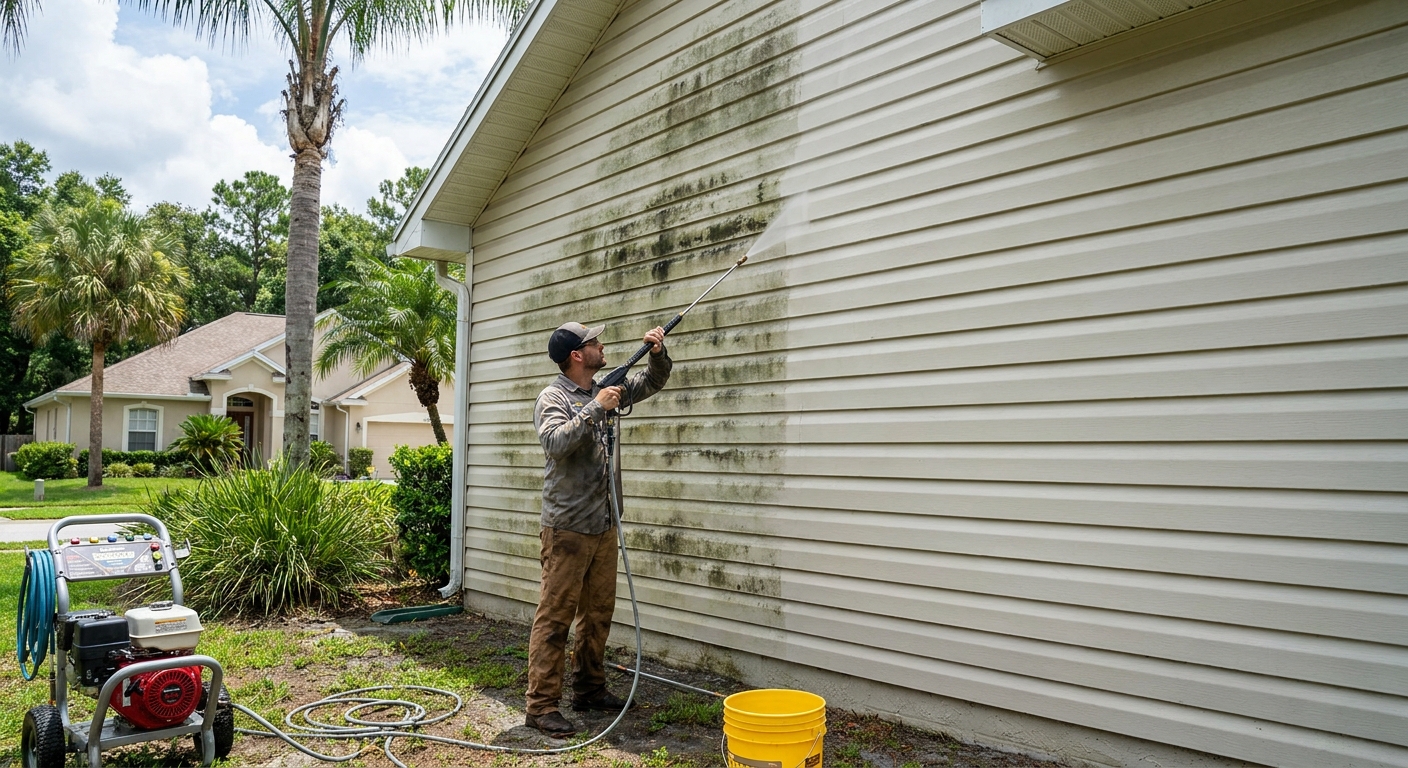
Mold isn't just ugly. It eats into materials, stains surfaces permanently if left too long, and creates air quality issues around your home. The good news is that power washing services work when done right. The bad news is that most people either use too much force or skip the prep work that actually kills the spores. We're going to walk through what actually removes mold, what protects your siding, and where most DIY efforts fall short.
The Climate Works Against You
Florida's weather isn't just warm. It's relentlessly damp. Mornings bring dew. Afternoons bring storms. Evenings bring more moisture. That cycle creates the perfect environment for mold, mildew, and algae to latch onto any exterior surface. Siding — whether it's vinyl, wood, fiber cement, or stucco — becomes a canvas for organic growth the moment conditions align.
Shaded areas get hit hardest. North-facing walls, spots under eaves, anywhere trees or shrubs block airflow — those are mold magnets. The longer it sits, the deeper it grows. Surface cleaning won't cut it once the roots dig in. That's where pressure washing earns its keep, assuming the operator knows how to use more than just brute force.
How the Process Actually Works
Pressure washing relies on water velocity to dislodge contaminants. The nozzle determines the spread and intensity. A zero-degree tip concentrates all that power into a pinpoint stream — great for concrete, terrible for siding. A 25- or 40-degree tip spreads the water out, reducing impact while still delivering enough force to strip away buildup.
Water alone can remove surface mold, but it won't kill what's embedded. That's where cleaning agents come in. Mold-specific detergents break down the cellular structure of spores and prevent regrowth. Apply the solution, let it dwell for a few minutes, then rinse with controlled pressure. Skip the detergent, and you're just giving mold a bath.
What Pressure Washing Does Well
- Strips away visible mold, mildew, and algae from all common siding types
- Reaches textured surfaces where mold hides in grooves and seams
- Prevents long-term staining and material degradation when done regularly
- Restores original color and finish without harsh scrubbing or abrasives
- Reduces allergens and airborne spores around entry points and windows
Where Most People Mess Up
Too much pressure is the number one mistake. Vinyl siding can crack. Wood can splinter. Stucco can chip. Even fiber cement can show surface damage if you're too aggressive. Most residential jobs need between 1,200 and 2,000 PSI — not the 3,000+ that some machines push out. Higher pressure doesn't mean cleaner results. It just means faster damage.
The second mistake is ignoring the cleaning solution. Water removes what you can see. Detergent kills what you can't. If you're not pre-treating with a mold killer, you're leaving spores behind. They'll be back in weeks, not months. And if you're using bleach? That might lighten stains temporarily, but it doesn't penetrate or prevent regrowth the way specialized cleaners do.
The Right Way to Clean Mold Off Siding
- Start with a low-pressure rinse to wet the surface and loosen debris
- Apply mold-killing detergent from bottom to top, letting it sit for 5 to 10 minutes
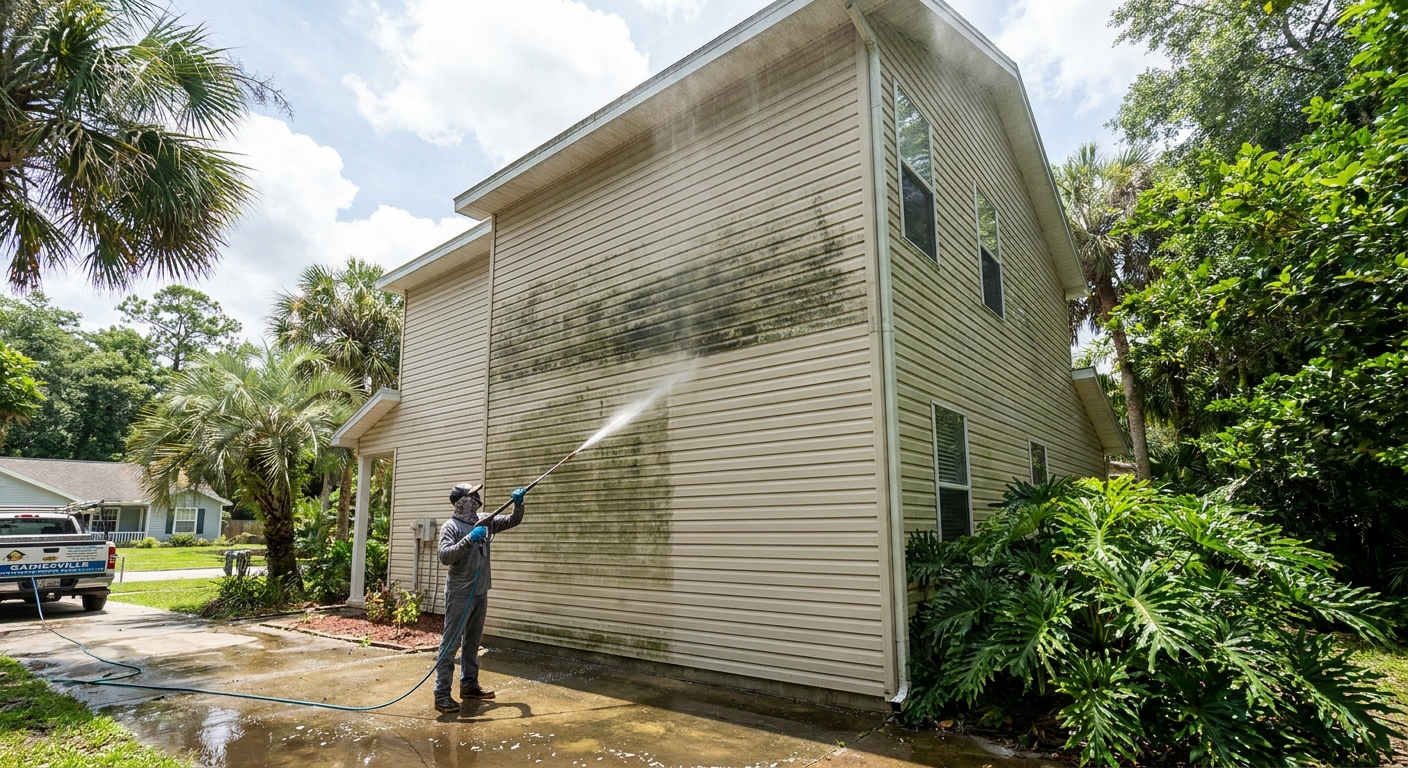
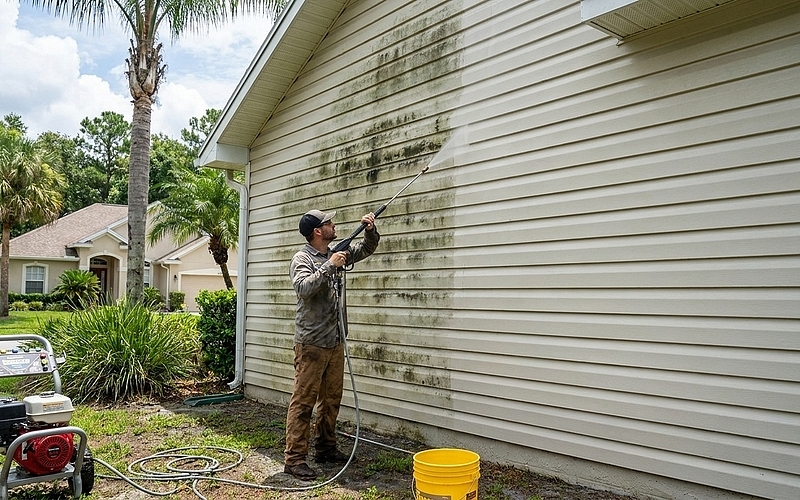
- Use a wide-angle nozzle and keep the wand at least 12 inches from the siding
- Rinse from top to bottom in overlapping passes to avoid streaks
- Inspect for missed spots and reapply detergent only where needed
When DIY Becomes a Gamble
If mold has been sitting for months or years, it's not just on the surface. It's in the pores. It's under edges. It's behind trim. At that point, homeowner-grade equipment and guesswork won't be enough. Professional services bring commercial-grade pressure washers, industrial detergents, and the experience to identify problem areas before they become expensive repairs.
Pros also handle containment and runoff properly. Mold-contaminated water can't just drain into landscaping or storm systems. There are disposal protocols, especially in Florida where environmental regulations are strict. If you're not set up for that, you're creating liability along with a cleaner house.
Keeping Mold From Coming Back
- Trim vegetation away from siding to improve sunlight exposure and airflow
- Clean gutters regularly so water doesn't overflow onto exterior walls
- Redirect downspouts to move water at least six feet from the foundation
- Schedule annual pressure washing before mold has a chance to establish colonies
- Apply a mold inhibitor after cleaning to extend protection between washes
What to Look for in a Pressure Washing Service
Not all services are equal. Some show up with a consumer-grade washer and a garden hose attachment. Others bring truck-mounted systems with heated water, multiple detergent tanks, and adjustable pressure controls. The difference shows up in results — and in how long those results last.
Ask about their cleaning agents. If they're using straight bleach or generic degreasers, walk away. Mold needs targeted treatment. Ask about their process. If they can't explain why they use certain nozzles or pressure settings for your siding type, they're winging it. And ask for proof of insurance. House washing in Destin can cause water intrusion, broken windows, or damaged landscaping. You want someone who's covered if things go sideways.
The Cost of Waiting
- Mold penetrates deeper into porous materials the longer it sits
- Permanent staining can occur within months on untreated wood or stucco
- Structural integrity weakens as mold breaks down organic compounds in siding
- Property value drops when curb appeal takes a visible hit from neglect
- Health risks increase as spore concentrations build up near doors and windows
Pressure Washing Gets It Done
Mold on Florida siding isn't a cosmetic issue you can ignore. It's an active problem that gets worse every humid day. Soft washing and pressure washing remove it, but only when the operator uses the right pressure, the right detergent, and the right technique. Homeowners who try to muscle through with maximum PSI and no prep work end up with damaged siding or mold that reappears in weeks.
Whether you handle it yourself or bring in a pro, the key is consistency. Clean once, and mold will return. Clean annually with proper prevention steps, and you'll stay ahead of it. Florida's climate won't change. Your maintenance routine has to.
Let’s Protect Your Home Together
We know how quickly mold can take over your siding in Florida’s climate, but you don’t have to fight it alone. Let’s keep your home looking its best and safeguard your investment with expert pressure washing that truly makes a difference. If you’re ready for a cleaner, healthier exterior, call us at 770-540-9761 or get a quote and let’s get your home back on track.
‹ Back
Recent Posts
-

Should You Pressure Wash Before Exterior Painting in Florida?
September 8, 2026
-

Are Your Gainesville Gutters Overflowing During Heavy Rain?
August 25, 2026
-
Why Does Algae Keep Coming Back on Florida Driveways?
August 11, 2026
-
Is Your Gainesville Deck Starting to Feel Unsafe?
July 28, 2026
-
Can Pressure Washing in Florida Remove Mold from Siding?
July 14, 2026






.png)